Winter Plants Watercolor Clipart: A Botanical Collection for Designers
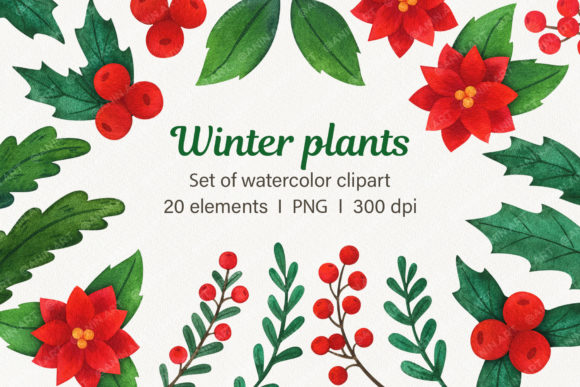
When the air turns crisp and the world outside quiets under a blanket of snow, the design world leans into a specific visual language. It’s a language of deep greens, rich reds, and the intricate textures of nature at rest. For years, creating this seasonal atmosphere from scratch was a time-consuming task. You’d either spend hours with watercolors and a scanner or hunt for generic stock that never quite captured the right handcrafted feel. This is where a thoughtfully curated asset collection changes the entire workflow. The Winter Plants Watercolor Clipart collection is exactly that—a versatile toolkit of 20 high-resolution botanical elements designed to inject authentic, seasonal charm into a multitude of projects.
This isn't just a random assortment of images. Each piece, from the delicate needles of a fir branch to the vibrant petals of a poinsettia, was painted with watercolors. This means you get the beautiful, unpredictable bleed of color, the subtle texture of the paper, and the organic imperfections that digital tools struggle to replicate perfectly. The personality of this collection is one of warmth, elegance, and natural beauty. It feels personal and artistic, avoiding the sterile, overly-polished look of vector graphics. The style bridges the gap between traditional illustration and modern design needs, making it a powerful asset for anyone looking to create designs with a genuine, tactile quality.
From Screen to Print: Where These Botanical Elements Shine
The true value of a design asset lies in its adaptability. A collection like this one, with its 20 distinct elements—including holly, berries, branches, and foliage—offers incredible flexibility. The PNG format with a transparent background is the key here. It means each watercolor clipart can be layered, scaled, and combined without worrying about clashing backgrounds or awkward white boxes. This makes them ideal for both digital and physical applications.
Consider the realm of packaging design. A small artisan soap company could use a delicate holly sprig on its gift tags, or a coffee roaster could feature a bold fir branch on its winter blend bag. The watercolor style immediately communicates a sense of small-batch, handcrafted quality. For editorial design, these elements are perfect for decorating the margins of a holiday magazine, creating a festive header for a blog post, or illustrating a seasonal recipe. The texture adds depth and interest without overwhelming the typography.
The applications extend far beyond the obvious. In social media graphics, a single poinsettia or a cluster of berries can become a recognizable brand element for the season. Entrepreneurs and small business owners can use them to create cohesive holiday marketing campaigns across Instagram, Pinterest, and Facebook, ensuring a professional and festive brand identity. For personal projects, the possibilities are endless: custom Christmas cards, unique calendars, wall art prints, or even decorative elements for a family photo book. The collection provides the building blocks; your creativity provides the blueprint.
Strategic Design: Integrating Botanicals with Typography
Using clipart effectively is about more than just decoration; it's about creating visual harmony and guiding the viewer's eye. When you introduce organic, textured elements like these watercolor plants, your choice of typography becomes critical. The goal is contrast and balance. A flowing, elegant script font can pair beautifully with the soft edges of the watercolors, creating a romantic, high-end feel perfect for wedding invitations or luxury brand packaging. Conversely, a clean, geometric sans serif font provides a modern, structured counterpoint to the organic shapes, making the design feel contemporary and fresh—a great combination for a tech company's holiday e-card or a minimalist blog layout.
Think about visual hierarchy. A large, bold fir branch can act as a background texture, while a smaller, more detailed berry cluster can serve as a bullet point or a subtle accent. This layering creates depth and makes your layout more dynamic. For logo design, while you wouldn’t typically build an entire logo from clipart, a single, stylized winter plant element could be incorporated as a mark or monogram, especially for businesses with a botanical, eco-friendly, or artisanal focus. The key is to use these assets to support and enhance your core message, not distract from it. They should feel like an integrated part of the design system, not an afterthought.
Making the Most of Your Creative Toolkit
Before diving into a project, take a moment to audit the collection. The set includes a variety of forms: full branches, single leaves, flowers, and berries. This variety allows for both minimalist and complex compositions. A simple postcard might only need one perfectly placed poinsettia, while a full-page poster could feature an intricate border made from multiple intertwined elements. Don’t be afraid to rotate, resize, and overlap the pieces to create new, unique arrangements.
When evaluating fit, consider the overall mood you want to evoke. The watercolor style inherently leans towards a more traditional, artistic, and heartfelt aesthetic. It’s perfect for projects where you want to convey warmth, craftsmanship, and a connection to nature. It might be less suitable for ultra-modern, tech-driven, or stark minimalist designs where clean vectors are the norm. Always test your chosen font pairing with the clipart in place. Does the text remain legible? Does the overall composition feel balanced? The 300 dpi resolution ensures that the details remain sharp even when printed, which is essential for professional print applications like posters and high-quality packaging.
Ultimately, a collection like the Winter Plants Watercolor Clipart is about saving time and elevating quality. It provides a library of professional, cohesive design assets that can be mixed and matched across an entire project or seasonal campaign. For designers, it’s a shortcut to beautiful, textured compositions. For entrepreneurs and marketers, it’s a way to produce polished, engaging content without a massive budget. For hobbyists and crafters, it’s a source of endless inspiration. By understanding the style’s strengths and applying it with thoughtful typographic choices, you can transform a simple design into something that feels genuinely special and seasonally resonant.